

When Does Installation Add Value to Equipment?
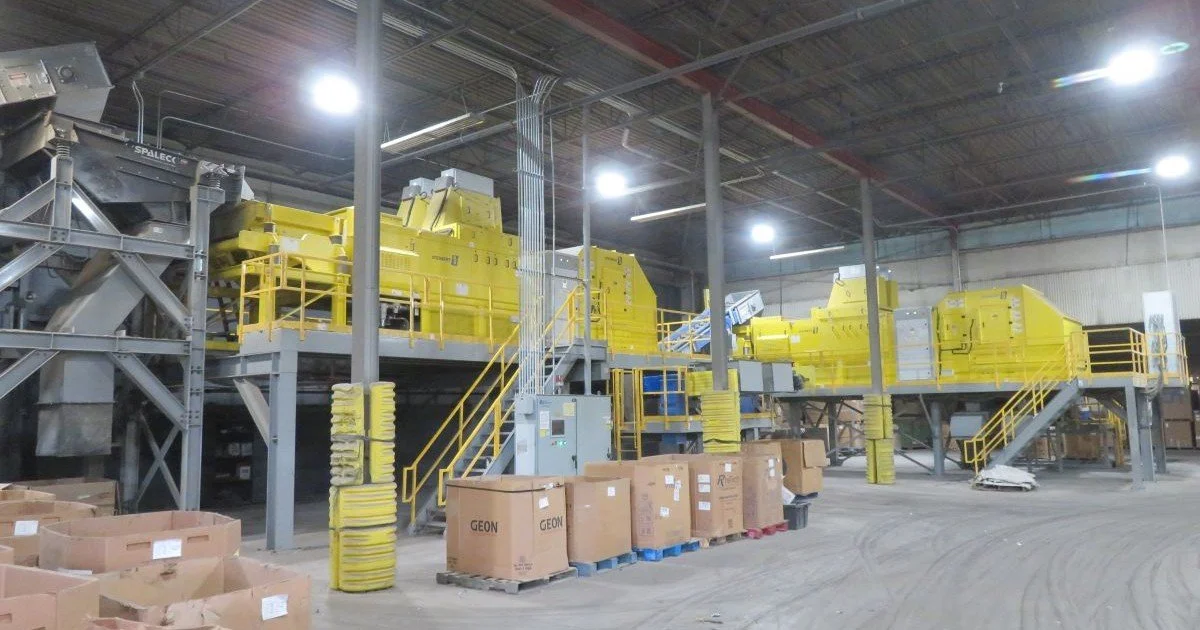
A manufacturing company recently bought a new machine with a total project cost of $600,000, broken down as follows:
$500,000 machine
$25,000 sales tax
$5,000 freight and rigging
$50,000 physical installation, facility preparation, and skilled labor
$20,000 programming and commissioning
The company’s CFO believes that the company now owns a $600,000 machine.
Is the CFO correct? Is the machine’s starting value inherently increased dollar-for-dollar by its associated installation costs?
Or is the machine still worth just $500,000, as it was before it was installed?
The answer depends on the purpose of the equipment appraisal and whether the installation provides value to the buyer being considered.
Price and Value are Not the Same Thing
Before addressing equipment and installation, we need to get back to basics.
One of the foundational concepts of equipment appraisal (and all valuation theory) is that price and value are not always equivalent.
- Price is what somebody paid for something. Price is a fixed fact.
- Value is what something is worth under a specific set of circumstances. Value is a variable opinion.
- To quote Warren Buffett, “Price is what you pay; value is what you get.”
You can find various definitions in Uniform Standards of Professional Appraisal Practice (USPAP) and Valuing Machinery and Equipment (the ASA textbook), but they all have similar implications: what you paid for something doesn’t tell you what it’s worth.
For a basic example, consider a cup of plain black coffee, which costs $2.25 at your local convenience store.
If you buy the coffee, your price was $2.25. That is a fact. But how much is that coffee worth to you? That is highly circumstantial!
- On a cold early morning before a long drive, with no other stores open, if you feel you must have a cup of coffee to keep you alert, you might pay $20.00 or even $50.00 for that cup of coffee. The coffee is worth an awful lot to you in that situation. $2.25 is a bargain!
- On a warm evening, close to home and close to bedtime, you have no need and may have no desire to drink coffee. You likely wouldn’t drink a cup if it was given to you for free, so you certainly aren’t going to pay $2.25 for it!
The concept of situational value applies to everything we buy and sell, including cars, homes, consumer goods, and investments.
We buy things when their value to us is higher than the price required to obtain them. When something requires a price which is higher than its value – whether that value is economic, psychological, or otherwise – we don’t buy it.
What Factors Affect Machinery and Equipment Value?
It may be natural to think that the value of commercial equipment always starts at 100% of its cost and reduces steadily over its life. While it is true that increased age and usage will generally reduce the value of an asset, they are not the only determinants.
Just like the cup of coffee in the prior section, the value of commercial machinery and equipment is situational and depends on the specific parties and circumstances.
For example, used road construction machinery may command a premium in a region with several major highway construction projects. The same equipment may be worth less if it must be transported a long distance, or if highway funding has been reduced or suspended.
Following this line of thinking, one can imagine countless circumstances in which the value of M&E will be variable due to factors which have nothing to do with age or usage:
- When diesel prices increase, semi trucks with high fuel efficiency become worth more as their operating costs are relatively lower than those with low fuel efficiency.
- When John Deere raises the price of new tractors, used tractors become worth more as smaller farmers may be unable to afford new models.
- When Medicare reimbursement is reduced for a medical procedure, the associated equipment becomes worth less as practitioners cannot bill enough to economically justify the original price.
Professional equipment appraisers spend their careers learning how to identify and analyze these types of economic and functional factors and their effects on used equipment values.
The Premise of Value is the Key to the Appraisal
Let’s return to the opening example of this article (the new $600,000 machine). You will recall that the machine had a price of $500,000, with an additional $100,000 in acquisition and installation costs.
If a client were to ask, “What is the value of this installed equipment?” the only appropriate response would be to ask in return, “Value to whom and under what circumstance?” Another way to ask that question would be to say, “What is the value premise?”
The applicable premise of value identifies the circumstances under which the equipment is being valued. Appraisers may also refer to the basis, definition, or type of value, depending on the applicable standards and sources being cited.
- For example, an “In Place” value premise tells us that a buyer is likely acquiring an entire business which includes this machine, and leaving the machine in production.
- On the other hand, a “Removed” value premise tells us that a buyer is going to have to buy the machine and remove it from the facility.
There are many value premise definitions available from reputable sources, including the ASA, IRS, IVS, and others. The appraiser’s job is to select a value premise which is appropriate for the intended use of the appraisal results.
For our example machine, the implications for valuation are clear:
- Let’s say that Buyer A will be using the machine in its current location. Buyer A will likely pay the seller something for the value contributed by the installation costs. This is because the buyer’s alternative path would be to acquire a similar machine and install it themselves, incurring costs similar to those already incurred by the seller. It is more prudent to simply pay the seller for the machine which is already in production.
Assuming the recent project costs are representative of current replacement costs, Buyer A’s appropriate starting point for valuation would generally be the replacement cost of the total machine plus installation: $600,000.
- On the other hand, Buyer B intends to remove the machine from its current location. Buyer B is not likely to pay the seller anything for their installation costs. This is because those costs are not providing any value to the buyer; the buyer is going to have to reincur those costs when relocating the machine to another facility and installing it again, so paying the seller for those costs would effectively require the buyer to pay for installation twice.
Under the same assumption, Buyer B’s appropriate starting point for valuation would generally be the replacement cost of just the machine: $500,000.
To put it succinctly: Buyer A is buying an installed machine; Buyer B is buying a loose machine. Regardless of all other factors which will determine the final value - such as removal costs, transaction costs, age, condition, obsolescence, and economic demand factors - these two buyers are starting negotiations in very different places.
Appraisal clients may be puzzled when appraisers begin assignments by inquiring in detail about the purpose of the assignment. “Why do you need to know all of that? Can’t you just tell me what it’s worth?”
This example demonstrates why knowing the answer to the question “Value to whom and for what?” is an essential starting point for a qualified appraisal.
Not Every Dollar of Installation Cost Adds a Dollar of Value
The examples above are intentionally simplified. It is important to note that even when a machine is being valued in place, it is not a given that every dollar of installation cost contributes a dollar of value.
Some installation costs are highly specific to the current owner. A company may have paid for unusual site preparation, overtime labor, expedited freight, engineering changes, or modifications which would not be necessary for a typical buyer. These costs were certainly real to the current owner, but that does not necessarily mean a buyer will pay for them.
An M&E appraiser therefore has to consider not simply what the owner spent, but what benefit those costs will provide to a buyer.
Consider this real-world example from our appraisal practice:
A metal recycling plant had installed a complex line for cleaning aluminum metal chips from machine shops.
Halfway through installation, the line was redesigned due to unforeseen complications. Several large assets, including a mezzanine, control room, and large rotating drum washer, had to be relocated.
As a result, the installation costs for this line were much higher than expected. The owner had to bear those costs.
However, we did not consider the extra relocation and redesign costs in our appraisal. Our position was, “A buyer of this facility is not getting any value from the fact that the seller paid more than was necessary.” Our appraisal started with a reasonable and typical replacement cost for the machinery plus installation.
An everyday example which may clarify the point would be a home for sale with a new water heater. Let’s suppose the seller recently installed the water heater themselves, did it incorrectly, and then had a professional reinstall it. The seller unfortunately had to pay twice for installation, but the buyer is only going to pay for one properly installed water heater.
Designated equipment appraisers use phrases such as usual and customary or reasonable and typical costs when evaluating these types of circumstances. The buyer of a commercial enterprise may certainly consider what the seller paid, but they are ultimately concerned with what they would have to pay to acquire and build a similar enterprise themselves.
Are Installation Costs Included in Equipment Value?
So, did the company in our opening example acquire a $600,000 machine?
The answer is unsatisfying but honest: it depends on who is asking and why they’re asking.
The company unquestionably spent $600,000 to acquire and place the machine into service. But historical cost is not necessarily equivalent to market value.
If the machine is being valued as part of an operating facility, some or all of the acquisition and installation costs will generally contribute to its value. If the machine is being valued for sale and removal, most of those costs provide no benefit to the next owner.
Factors such as age, condition, remaining useful life, functional obsolescence, and market demand must then be considered before arriving at a final value conclusion.
This is why a qualified equipment appraisal begins with the intended use and applicable premise of value rather than simply taking the current owner’s historical costs at face value.
The question is not just, “How much did it cost to install?”
The more important question is, “Does that installation provide value to the buyer we are considering?”
Common Questions
Does installation cost increase equipment value?
Sometimes. Installation costs may contribute to equipment value when the machinery is being valued in place and the installation provides a benefit to the buyer. If the equipment will be removed and relocated, many existing installation costs may provide little or no value to that buyer.
Are installation costs included in an equipment appraisal?
It depends on the premise of value and intended use of the appraisal. An equipment appraiser may consider freight, rigging, foundations, electrical work, piping, controls, programming, commissioning, and other installation costs when they contribute value under the circumstances being appraised.
Is equipment cost the same as equipment value?
No. Equipment cost is the amount paid to acquire and install an asset. Equipment value is an opinion of what the asset is worth under a specific set of circumstances. Historical cost may be useful evidence, but it does not automatically equal market value.